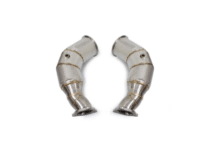
Unlocking True Performance: A Closer Look at BMW M5 G90 G99 Secondary Downpipes and BMW M3 G80 Downpipes
There’s something undeniably addictive about driving an M car. The way it pulls, the deep growl under acceleration, that quiet confidence sitting behind the wheel — it’s not just transportation, it’s an experience. But for many BMW enthusiasts, stock performance is just the beginning. If you’ve recently been eyeing upgrades for your new-generation M models, you’ve probably come across bmw m5 g90 g99 secondary downpipes in your search.
So, what’s the real story behind these performance parts? And are they worth it?
Let’s dig in.
Why Downpipes Matter in Modern BMW M Cars
BMW’s latest M models — including the G90 and G99 M5 and the G80 M3 — are engineering masterpieces. They come equipped with advanced turbocharged engines that already deliver impressive power figures. However, factory exhaust systems are often built with emissions regulations and noise restrictions in mind.
That’s where downpipes come into play.
Downpipes are a crucial section of the exhaust system that connect the turbochargers to the rest of the exhaust. By reducing restrictions in this area, you allow exhaust gases to exit more freely. The result? Improved turbo efficiency, better throttle response, and often noticeable gains in horsepower and torque.
BMW M5 G90 G99 Secondary Downpipes: Subtle but Effective
The new M5 G90 sedan and G99 touring models are expected to redefine high-performance luxury once again. While primary downpipes get a lot of attention, secondary downpipes are increasingly popular among enthusiasts who want performance improvements without going too extreme.
Upgrading bmw m3 g80 downpipes can offer:
- Enhanced exhaust flow
- A deeper, more aggressive exhaust note
- Improved turbo spool characteristics
- Potential power gains when paired with tuning
What makes secondary downpipes appealing is that they’re often less intrusive compared to primary catless options. Many owners prefer them because they strike a balance between performance and practicality. You get that sharper sound and freer breathing engine, but without drastically altering emissions components in some setups.
For daily-driven M5 owners, this balance is important. You want the thrill — but you also want usability.
BMW M3 G80 Downpipes: A Popular Performance Upgrade
Now, let’s talk about the G80 M3 — a car that has quickly built a massive following. Powered by the S58 twin-turbo engine, the M3 G80 responds exceptionally well to modifications.
Installing bmw m3 g80 downpipes is one of the most common first upgrades among performance enthusiasts. Here’s why:
- Significant power gains, especially with ECU tuning
- Faster turbo spool
- Increased torque throughout the rev range
- More pronounced exhaust sound
With the right tune, upgraded downpipes on the G80 can unlock impressive performance figures. Many drivers report a completely transformed driving feel — sharper, more urgent, and more alive.
However, it’s important to remember that catless or high-flow downpipes may impact emissions compliance depending on your region. Always check local regulations before installation.
Sound, Power, and Driving Feel
One of the biggest reasons enthusiasts consider downpipe upgrades isn’t just horsepower numbers — it’s the sound.
Modern M cars are refined, sometimes almost too refined. Aftermarket downpipes open up the exhaust note, adding character and aggression. Cold starts become more dramatic. Acceleration sounds raw and purposeful. It’s that emotional connection that keeps drivers coming back for more.
And then there’s the throttle response. With reduced exhaust restriction, turbochargers can operate more efficiently. The car feels quicker to react, especially in mid-range acceleration. It’s subtle on paper but noticeable on the road.
Pairing with ECU Tuning
To maximize the benefits of secondary or primary downpipes, many owners pair them with professional ECU tuning. The factory software is conservative by design. A proper tune can optimize air-fuel ratios, boost pressure, and timing to take full advantage of improved exhaust flow.
That said, tuning should always be done by experienced professionals. Reliability matters — especially on high-performance engines like the S58.
Is It Worth the Upgrade?
If you’re the type of driver who enjoys extracting every ounce of potential from your M car, upgrading downpipes can be a rewarding modification. For M5 G90 and G99 owners, secondary downpipes offer a refined path to enhanced performance. For G80 M3 drivers, downpipes are often the gateway to serious power gains.
At the end of the day, it comes down to what you want from your car. More sound? More power? A sharper edge? Downpipes might just be the upgrade that transforms your BMW from impressive to unforgettable.
And for many enthusiasts, that transformation is exactly the point.