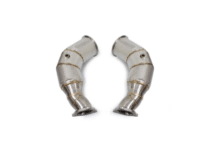
A Real Look at Downpipes for M5 G90 G99 and M3 G80
There’s something oddly addictive about refining a performance car. You start with a stock powerhouse, and before you know it, you’re deep into upgrades, chasing that perfect balance of sound, speed, and response. For BMW enthusiasts, especially those driving the latest M models, downpipes have quietly become one of the most talked-about modifications.
And honestly, it makes sense.
Why Downpipes Matter More Than You Think
Most people assume horsepower gains come from flashy upgrades like turbos or tuning maps. But downpipes? They’re kind of the unsung heroes. Sitting right after the turbochargers, they control how exhaust gases flow out of the engine. The smoother that flow, the less restriction — and that translates into better performance.
When you replace restrictive factory units with performance-oriented ones, you’re essentially letting the engine breathe. And engines, much like humans, perform better when they can breathe freely.
Understanding BMW M5 G90 G99 Secondary Downpipes
The new-generation M5, whether you’re talking about the sedan (G90) or the touring version (G99), is already engineered like a beast. But even beasts have limitations, especially when manufacturers have to meet strict emissions and noise regulations.
That’s where bmw m5 g90 g99 secondary downpipes come into play.
Secondary downpipes focus on improving exhaust flow after the primary catalytic converters. They don’t interfere as aggressively with emissions systems as primary downpipes do, which makes them a bit more practical for daily-driven builds.
The result? A noticeable bump in exhaust tone — deeper, sharper, more aggressive — along with subtle gains in performance. It’s not always about huge horsepower jumps. Sometimes it’s about how the car feels when you press the throttle… that instant response, that refined aggression.
BMW M3 G80 Downpipes: A Different Kind of Upgrade
The M3 G80 is already a favorite among enthusiasts. It’s lighter, more agile, and arguably more “driver-focused” compared to the M5. That means every upgrade feels more immediate, more noticeable.
Installing bmw m3 g80 downpipes takes things up a notch.

5
Here, downpipes often replace the stock catalytic converters with high-flow or catless versions. The impact is more aggressive compared to secondary upgrades. You’ll typically see:
- Faster turbo spool
- Increased horsepower and torque
- A louder, more raw exhaust note
But it’s not all sunshine. There are trade-offs. You might deal with check engine lights, emissions compliance issues, or even increased cabin noise. It really depends on how far you want to push your build.
Sound vs Performance: What Should You Prioritize?
This is where things get personal.
Some drivers chase numbers — dyno sheets, quarter-mile times, measurable gains. Others? They just want that perfect exhaust note that turns heads at every red light.
Secondary downpipes (like those on the M5) lean more toward refinement. They enhance what’s already there without completely transforming the car.
Primary downpipes (common on the M3 G80) are more aggressive. They change the character of the car, sometimes dramatically.
Neither is “better.” It just depends on what kind of driving experience you’re after.
Installation and Practical Considerations
Let’s be real for a second — installing downpipes isn’t exactly a beginner DIY project. It involves working around the turbo area, tight spaces, and heat-sensitive components.
Most owners prefer getting it done at a professional performance garage. Not just for safety, but also to ensure everything is fitted properly without leaks or long-term issues.
Also, tuning often goes hand-in-hand with downpipe upgrades. Without proper tuning, you might not fully unlock the benefits — and in some cases, you could even run into engine warnings.
Final Thoughts
There’s no one-size-fits-all approach when it comes to performance upgrades. What works for an M5 might not suit an M3, and vice versa.
Downpipes, though, sit in that sweet spot. They’re impactful without being overly complicated, noticeable without being over-the-top (unless you want them to be).
Whether you’re refining a luxury powerhouse like the M5 or sharpening the edge of an M3, the right

The Importance of Clean Engine Bays in Online Car Listings in Rowlett TX
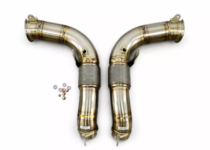
Unlocking True Performance: A Closer Look at BMW M5 G90 G99 Secondary Downpipes and BMW M3 G80 Downpipes